beautiful music and images.
Saturday, April 14, 2007

Teacher Talking Time
Teacher Talking Time : Part One

At one time teacher talking time (TTT) was seen as being inevitably counterproductive and something to be limited as much as possible. Why? There are five main arguments against it :
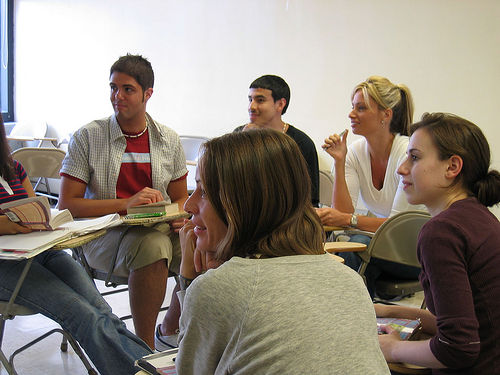
In the first part of this article I looked at the reasons why teacher talking time (TTT) can be counterproductive if used to excess and unthinkingly. But there’s another side to the coin : used intelligently TTT can also be a useful aid to learning. How?
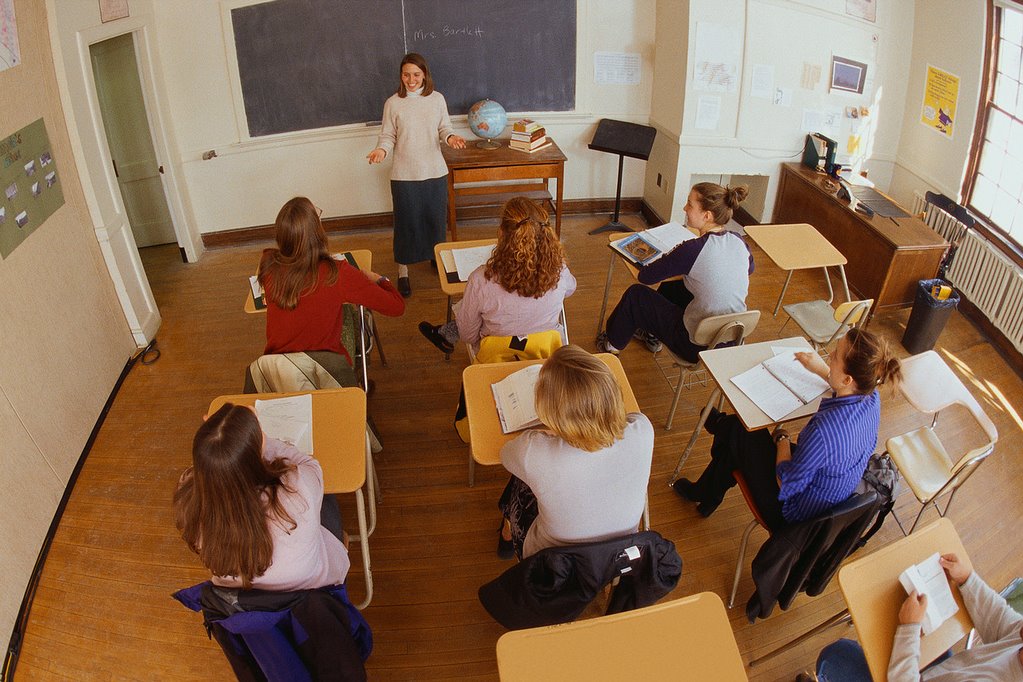
In the first part of this article we looked at some of the disadvantages of too much “traditional” teacher talk in the classroom, and in particular the way that it will inevitably distort natural discourse patterns. Classroom discourse has rules of its own, which are not those of normal conversation.
At one time teacher talking time (TTT) was seen as being inevitably counterproductive and something to be limited as much as possible. Why? There are five main arguments against it :
Teacher Talking Time : Part Two
In the first part of this article I looked at the reasons why teacher talking time (TTT) can be counterproductive if used to excess and unthinkingly. But there’s another side to the coin : used intelligently TTT can also be a useful aid to learning. How?
Teacher Talking Time : Part Three
In the first part of this article we looked at some of the disadvantages of too much “traditional” teacher talk in the classroom, and in particular the way that it will inevitably distort natural discourse patterns. Classroom discourse has rules of its own, which are not those of normal conversation.
Friday, April 13, 2007
News share _Researchers explore scrapping Internet

Leonard Kleinrock comments on the dark side of the Internet - spam, pornography, among others - at his office in the UCLA Computer Science Department in Los Angeles, Tuesday, March 27, 2007. Kleinrock created the basic principles of packet switching, the technology underpinning the Internet, while a graduate student at MIT. He was the first to develop the underlying principles of packet switching, the communications technology of the Internet, a decade before the Internet was founded. (AP Photo/Damian Dovarganes)
Researchers explore scrapping Internet
By ANICK JESDANUN, AP Internet Writer 1 hour, 15 minutes ago
http://news.yahoo.com/s/ap/20070414/ap_on_hi_te/rebuilding_the_internet;_ylt=AkxImS1txHFGYOnaq1AB57Ws0NUENEW YORK - Although it has already taken nearly four decades to get this far in building the Internet, some university researchers with the federal government's blessing want to scrap all that and start over.
The idea may seem unthinkable, even absurd, but many believe a "clean slate" approach is the only way to truly address security, mobility and other challenges that have cropped up since UCLA professor Leonard Kleinrock helped supervise the first exchange of meaningless test data between two machines on Sept. 2, 1969.
The Internet "works well in many situations but was designed for completely different assumptions," said Dipankar Raychaudhuri, a Rutgers University professor overseeing three clean-slate projects. "It's sort of a miracle that it continues to work well today."
No longer constrained by slow connections and computer processors and high costs for storage, researchers say the time has come to rethink the Internet's underlying architecture, a move that could mean replacing networking equipment and rewriting software on computers to better channel future traffic over the existing pipes.
Even Vinton Cerf, one of the Internet's founding fathers as co-developer of the key communications techniques, said the exercise was "generally healthy" because the current technology "does not satisfy all needs."
One challenge in any reconstruction, though, will be balancing the interests of various constituencies. The first time around, researchers were able to toil away in their labs quietly. Industry is playing a bigger role this time, and law enforcement is bound to make its needs for wiretapping known.
There's no evidence they are meddling yet, but once any research looks promising, "a number of people (will) want to be in the drawing room," said Jonathan Zittrain, a law professor affiliated with Oxford and Harvard universities. "They'll be wearing coats and ties and spilling out of the venue."
National Science Foundation wants to build an experimental research network known as the Global Environment for Network Innovations, or GENI, and is funding several projects at universities and elsewhere through Future Internet Network Design, or FIND.Rutgers, Stanford, Princeton, Carnegie Mellon and the Massachusetts Institute of Technology are among the universities pursuing individual projects. Other government agencies, including the Defense Department, have also been exploring the concept.
European Union has also backed research on such initiatives, through a program known as Future Internet Research and Experimentation, or FIRE. Government officials and researchers met last month in Zurich to discuss early findings and goals.A new network could run parallel with the current Internet and eventually replace it, or perhaps aspects of the research could go into a major overhaul of the existing architecture.
These clean-slate efforts are still in their early stages, though, and aren't expected to bear fruit for another 10 or 15 years — assuming Congress comes through with funding.
Guru Parulkar, who will become executive director of Stanford's initiative after heading NSF's clean-slate programs, estimated that GENI alone could cost $350 million, while government, university and industry spending on the individual projects could collectively reach $300 million. Spending so far has been in the tens of millions of dollars.
And it could take billions of dollars to replace all the software and hardware deep in the legacy systems.
Clean-slate advocates say the cozy world of researchers in the 1970s and 1980s doesn't necessarily mesh with the realities and needs of the commercial Internet.
"The network is now mission critical for too many people, when in the (early days) it was just experimental," Zittrain said.
The Internet's early architects built the system on the principle of trust. Researchers largely knew one another, so they kept the shared network open and flexible — qualities that proved key to its rapid growth.
But spammers and hackers arrived as the network expanded and could roam freely because the Internet doesn't have built-in mechanisms for knowing with certainty who sent what.
The network's designers also assumed that computers are in fixed locations and always connected. That's no longer the case with the proliferation of laptops, personal digital assistants and other mobile devices, all hopping from one wireless access point to another, losing their signals here and there.
Engineers tacked on improvements to support mobility and improved security, but researchers say all that adds complexity, reduces performance and, in the case of security, amounts at most to bandages in a high-stakes game of cat and mouse.
Workarounds for mobile devices "can work quite well if a small fraction of the traffic is of that type," but could overwhelm computer processors and create security holes when 90 percent or more of the traffic is mobile, said Nick McKeown, co-director of Stanford's clean-slate program.
The Internet will continue to face new challenges as applications require guaranteed transmissions — not the "best effort" approach that works better for e-mail and other tasks with less time sensitivity.
Think of a doctor using teleconferencing to perform a surgery remotely, or a customer of an Internet-based phone service needing to make an emergency call. In such cases, even small delays in relaying data can be deadly.
And one day, sensors of all sorts will likely be Internet capable.
Rather than create workarounds each time, clean-slate researchers want to redesign the system to easily accommodate any future technologies, said Larry Peterson, chairman of computer science at Princeton and head of the planning group for the NSF's GENI.
Even if the original designers had the benefit of hindsight, they might not have been able to incorporate these features from the get-go. Computers, for instance, were much slower then, possibly too weak for the computations needed for robust authentication.
"We made decisions based on a very different technical landscape," said Bruce Davie, a fellow with network-equipment maker Cisco Systems Inc., which stands to gain from selling new products and incorporating research findings into its existing line.
"Now, we have the ability to do all sorts of things at very high speeds," he said. "Why don't we start thinking about how we take advantage of those things and not be constrained by the current legacy we have?"
Of course, a key question is how to make any transition — and researchers are largely punting for now.
"Let's try to define where we think we should end up, what we think the Internet should look like in 15 years' time, and only then would we decide the path," McKeown said. "We acknowledge it's going to be really hard but I think it will be a mistake to be deterred by that."
Kleinrock, the Internet pioneer at UCLA, questioned the need for a transition at all, but said such efforts are useful for their out-of-the-box thinking.
"A thing called GENI will almost surely not become the Internet, but pieces of it might fold into the Internet as it advances," he said.
Think evolution, not revolution.
Princeton already runs a smaller experimental network called PlanetLab, while Carnegie Mellon has a clean-slate project called 100 x 100.
These days, Carnegie Mellon professor Hui Zhang said he no longer feels like "the outcast of the community" as a champion of clean-slate designs.
Construction on GENI could start by 2010 and take about five years to complete. Once operational, it should have a decade-long lifespan.
FIND, meanwhile, funded about two dozen projects last year and is evaluating a second round of grants for research that could ultimately be tested on GENI.
These go beyond projects like Internet2 and National LambdaRail, both of which focus on next-generation needs for speed.
Any redesign may incorporate mechanisms, known as virtualization, for multiple networks to operate over the same pipes, making further transitions much easier. Also possible are new structures for data packets and a replacement of Cerf's TCP/IP communications protocols.
"Almost every assumption going into the current design of the Internet is open to reconsideration and challenge," said Parulkar, the NSF official heading to Stanford. "Researchers may come up with wild ideas and very innovative ideas that may not have a lot to do with the current Internet."
Associated Press Business Writer Aoife White in Brussels, Belgium, contributed to this report.
Saturday, April 07, 2007
NPR-Dolphins Dodge Danger in the Bosphorus Strait

Environment
Dolphins Dodge Danger in the Bosphorus Strait

Nation
Dolphin Deaths a Mystery in Texas
Day to Day, March 20, 2007 · An unusually large number of dead dolphins are washing up on the coast of Galveston, Texas. Host Madeleine Brand talks with Heidi Watts, operations coordinator for the Texas Marine Mammal Stranding Network, about the mysterious deaths.
http://www.npr.org/templates/story/story.php?storyId=9008796
Research News
Study: Dolphins Call Out Their Own Names
Day to Day, May 10, 2006 · Researchers have found that some bottlenose dolphins use unique whistles to call out their own names. Noah Adams talks to Vincent Janik of the Sea Mammal Research Unit at St. Andrews University in Scotland about his study of the calls of wild bottlenose dolphins in Sarasota Bay, Fla.
http://www.npr.org/templates/story/story.php?storyId=5396030Wednesday, April 04, 2007
Reader Station
Reader Station
An article repository blog featuring great article and remarkable authoring minds.
http://readerstation.blogspot.com/
An article repository blog featuring great article and remarkable authoring minds.
http://readerstation.blogspot.com/
Sunday, January 14, 2007
Let children learn by themselves
Let children learn to judge their own work. A child learning to talk does not learn by being corrected all the time; if corrected too much, he will stop talking. He notices a thousand times a day the difference between the language he uses and the language those around him use. Bit by bit, he makes the necessary changes to make his language like other people's.
In the same way, children learning to do all the other things they learn to do without being taught – to walk, run, climb, whistle, ride a bicycle – compare their own performance with that of more skilled people, and slowly make the needed changes. But in school we never give a child a chance to find out his mistakes for himself, let alone correct them.
We do it all for him. We act as if we thought that he would never notice a mistake unless it was pointed out to him, or correct it unless he was made to. Soon he becomes dependent on the teacher. Let him do it himself. Let him work out, with the help of other children if he wants it, what this word says, what the answer is to that problem, whether this is a good way of saying or doing this or not.
If it is a matter of right answer, as it may be in mathematics or science, give them the answer book. Let him correct his own papers. Why should we teachers waste time on such routine work? Our job should be to help the child when he tells us that he can't fine the way to get the right answer. Let's end all this nonsense of grades, exams, marks. Let us throw them all out, and let the children learn what all educated persons must someday learn – how to measure their own understanding, how to know what they know or do not know.
Let them go on with the job in the way that seems the most sensible to them, with our help as schoolteachers if they ask for it. The idea that there is a body of knowledge to be learned at school and used for the rest of one's life is nonsense in a world as complicated and rapidly changing as ours. Anxious parents and teachers say, 「But suppose they fail to learn something essential, something they will need to get on in the world?" Don't worry! If it is essential, they will go out into the world and learn it.
In the same way, children learning to do all the other things they learn to do without being taught – to walk, run, climb, whistle, ride a bicycle – compare their own performance with that of more skilled people, and slowly make the needed changes. But in school we never give a child a chance to find out his mistakes for himself, let alone correct them.
We do it all for him. We act as if we thought that he would never notice a mistake unless it was pointed out to him, or correct it unless he was made to. Soon he becomes dependent on the teacher. Let him do it himself. Let him work out, with the help of other children if he wants it, what this word says, what the answer is to that problem, whether this is a good way of saying or doing this or not.
If it is a matter of right answer, as it may be in mathematics or science, give them the answer book. Let him correct his own papers. Why should we teachers waste time on such routine work? Our job should be to help the child when he tells us that he can't fine the way to get the right answer. Let's end all this nonsense of grades, exams, marks. Let us throw them all out, and let the children learn what all educated persons must someday learn – how to measure their own understanding, how to know what they know or do not know.
Let them go on with the job in the way that seems the most sensible to them, with our help as schoolteachers if they ask for it. The idea that there is a body of knowledge to be learned at school and used for the rest of one's life is nonsense in a world as complicated and rapidly changing as ours. Anxious parents and teachers say, 「But suppose they fail to learn something essential, something they will need to get on in the world?" Don't worry! If it is essential, they will go out into the world and learn it.
Monday, January 08, 2007
Wednesday, January 03, 2007
KEY QUALITIES OF IDEAL SUPERVISOR

KEY QUALITIES OF IDEAL SUPERVISOR
Supervisors are the most important people of any organization. As front-line managers, they are involved in motivating workers to achieve the overall objectives of the company. They are also responsible to communicate the top management』s vision and policies to the workers.
Additionally, as the spokesperson of the people working under their supervision, they are responsible to bring up the workers』 problems and suggestions to the top management. In this way, they act as cementing agent bringing together the top management and workers so that the organization』s objectives are achieved.
During numerous supervisory level training programmes, one of the exercises I always do so is to ask the participants to identify the qualities of a good supervisor. Surprisingly, most of these participants come up with some common qualities, which are elaborated below:
Know Their Job
One of the key qualities considered to make an ideal supervisor is the possession of through knowledge of his or her job. A supervisor who lacks the knowledge about his job will not be able to command the respect of the workers working under them.
Make Things Happen
No matter how difficult or challenging the task at hand may be, a good supervisor will try his or her best to make things happen. When others get frightened or scared at the task at hand, a good supervisor will make optimum use of all the available resources to solve the problems and achieve the desired results.
An ideal supervisor is a highly resourceful person who at times of problems looks for innovative ways to arrange both internal and external resources for solving the problem.
Committed and Responsible
There are no better feelings for a manager than the confidence that the job assigned to a supervisor will be completed and carried out as desired. Most employees look for and value supervisors who are committed to the company』s vision, goals and tasks.
A great supervisor takes personal responsibility for achieving the company』s vision, goals and completing routine tasks.
A Good Communicator
An excellent supervisor possesses or acquires good communication skills to convince others to do what he or she wants them to do. Giving his clear instructions, explaining the rationale of the job, guiding how the job needs to be done and presenting complex ideas in simple words are some of the duties which require excellent communication skills which every supervisor must possess.
Respectful and Courteous
Polite and courteous treatment of workers is another trait of a good supervisor. Each human being, no matter who they are or what they do deserve respect and humane treatment. With this attitude, a supervisor can achieve extraordinary results from the so-called ordinary workers.
Spokesperson for the Workers
Most of the time the only person who can communicate the problems and ideas of the workers to the middle and top management is the supervisor.
A supervisor should always bring up the workers problems to the higher management for solutions. They should also inform the top management the good performance of the workers and avoid taking credit for anything.
Develop People
Traditionally, most of the workers are either illiterate or less educated. This doesn』t mean that they lack potential or cannot improve themselves. Their present state could be due to the socioeconomic environment around which they were brought up. However, they should not be left to remain the same.
They should be trained, educated and developed to become better persons, and the ultimate responsibility for this noble task lies with the supervisor. As one of the most important persons in any organization, every supervisor should acquire the abovementioned qualities. This will enable them to perform their duties professionally.
Equipped with these qualities, they will earn the respect of their workers and get recognition from the top management. It is thus recommended to everyone involved in supervision to acquire these qualities in order to become an ideal supervisor.
objective (AIM) noun [C]something which you plan to do or achieve:
Her main/prime objective now is simply to stay in power.
Can the sales force achieve/meet its financial objectives?
elaborate (DETAILED) adjectivecontaining a lot of careful detail or many detailed parts:
You want a plain blouse to go with that skirt - nothing too elaborate.
They're making the most elaborate preparations for the wedding.
He came out with such an elaborate excuse that I didn't quite believe him.
optimum adjective [before noun] (ALSO optimal)
best; most likely to bring success or advantage:
A mixture of selected funds is an optimum choice for future security and return on investment.
commit (PROMISE) verb [I or T] -tt-
1 to promise or give your loyalty, time or money to a particular principle, person or plan of action:
[R] Like so many men, he has problems committing himself to a relationship.
The government must commit itself to improving health care.
Once we have committed to this course of action there is no going back.
commit yourself ,to express an opinion or to make a decision that you tell people about:I think I can come but I won't commit myself till I know for sure.
rationale noun [C or U] FORMAL
the reasons or intentions for a particular set of thoughts or actions:
I don't understand the rationale behind the council's housing policy.
courteous adjective polite and respectful; well-mannered:
Although she often disagreed with me, she was always courteous.
courteously adverb
He's always behaved courteously toward my family.
noble (MORAL) adjectivemoral in an honest, brave and not selfish way:
a noble gesture/ His followers believe they are fighting for a noble cause.
Monday, January 01, 2007
Storied Life

Storied Life
When Rueben Martinez set up a barbershop in Santa Ana, Calif., in 1973, he put out two of his favorite books—Bless Me, Ultima by Rudolfo A. Anaya and Rain of Gold* by Victor Villasenor—for people to read while waiting. 「Customers would get interested, then ask if they could borrow them. I would say, 『No, because I』ll never get them back.』」 After the umpteenth customer asked, Martinez got an idea—and a hammer.
He nailed together his own bookcases and slowly filled them with books. They included translations of popular Spanish authors and bilingual children's books. In six years the shop sold 500,000 books.
Martinez started holding art exhibits, poetry readings and signings. The store—Libreria Martinez Books and Art Gallery—evolved into a community center that draws students, senior citizens and ex-gang members.
In a school district where roughly 80 percent of third-graders have reading scores below the national average, Martinez, 60, has become a one-man literacy campaign. 「I want to build a community of readers,」 he declares. 「I want to make every child a card-carrying library member.」
Reading has always been important to Martinez. As a boy he'd rise early, sneak outside and peruse the newspaper delivered next door before his neighbor woke up. Once, the man caught him. 「That's okay, muchacho,」 he said. 「That's the way to learn.」
To pass that message beyond the bookstore walls, Martinez volunteers in juvenile halls and prisons. 「You have to start reading,」 he tells inmates. 「You have to start learning. The more you learn, the more you earn.」
At least one gang member took heed. Martinez explains, 「I was walking across campus at Santa Ana College when I heard, 『Mr. Martinez!』 This young man said, 『Remember me? I saw you in Los Pinos[juvenile-detention facility]. You told us to try to do something with our lives. When I got out I enrolled in college.』」
Today Martinez restricts his barbering to one or two days a week, though he』s had to struggle to survive as a bookseller. 「We want to stay in business,」 he says. 「But most of all, we want these children to succeed.」
Sunday, December 31, 2006
Children studying in hospital

Surprisingly, no one knows how many children receive education in English hospitals, still less the content or quality of that education. Proper records are just not kept.
We know that more than 850,000 children go through hospital each year, and that every child of school age has a legal right to continue to receive education while in hospital. We also know there is only one hospital teacher to every 1,000 children in hospital.
Little wonder the latest survey concludes that the extent and type of hospital teaching available differ a great deal across the country. It found that half the hospitals which admit children have no teacher. A further quarter have only a part-time teacher. The special children's hospitals in major cities do best; general hospitals in the country and holiday areas are worst off.
From this survey, one can estimate that fewer than one in five children have some contact with a hospital teacher – and that contact may be as little as two hours a day. Most children interviewed were surprised to find a teacher in hospital at all. They had not been prepared for it by parents or their own school. If there was a teacher, they were much more likely to read books and do mathematics or number work; without a teacher, they would only play games.
Reasons for hospital teaching range from preventing a child’s falling behind and maintaining the habit of school to keeping the child occupied, and the latter is often all the teacher can do. The position and influence of many teachers were summed up when parents referred to them as the “the library lady” or just “the helper.”
Children tend to rely on concerned school friends to keep in touch with schoolwork. Several parents spoke of requests for work being ignored or refused by the school. Once back at school, children rarely get extra teaching, and are told to catch up as best they can.
Many short-stay child-patients catch up quickly. But school do very little to ease the anxiety about falling behind expressed by many of the children interviewed.
Saturday, December 30, 2006
communication of cicadas

The cicada exemplifies an insect species which uses a combinatorial system. In the cicadas’ life cycle, communication is very important, for only through the exchange of sounds do they know where to meet and when to mate. Three different calls are employed for this purpose. Because of their limited sound-producing mechanisms, cicadas can make only ticks and buzzes. The only way they can distinguish between congregation and courtship calls is by varying the rate with which they make these ticks and buzzes.
The congregation call consists of 12 to 40 ticks, delivered rapidly, followed by a two-second buzz. It is given by males but attracts cicadas of both sexes. Once they are all together, the males use two courtship calls. The preliminary call – a slow, prolonged ticking – is given when the male notices a female near him. Then, the advanced call – a prolonged series of short buzzes at the same slow rate – is given when a female is almost within grasp. Although the preliminary call may be omitted if a female is suddenly discovered very nearby, it almost invariably occurs before the advanced call. So, during typical courtship, the two calls together result in a ticking followed by a buzzing – the same pattern which comprises the congregation call, but delivered at a slower rate.
In this way, cicadas show efficient use of their minimal sound-producing ability, organizing two sounds delivered at a high rate as one call and the same sounds delivered at a slow rate as two more calls.
Basic Facts: Insect Communication
http://www.insectzoo.msstate.edu/Students/basic.communication.html
Wednesday, December 20, 2006
news reading -- Sudoku anyone? Limber brain keeps seniors sharp
Sudoku anyone? Limber brain keeps seniors sharp
December 19, 2006 02:32:59 PM PST
In an indication that the brain like the body needs exercise in old age, researchers reported on Tuesday that older people given training in mental functions stayed sharper for years afterward.
The training involved formal sessions using such things as mnemonics that teach people to remember by using acronyms and rhymes. But it is reasonable to infer that games like Sudoko that emphasize reasoning skills could have some of the same benefits, said Michael Mariske of the University of Florida, one of the authors of the study.
He said one of the study's surprises was that the impact of formal training in memory, reasoning and speed of thinking could still be traced five years later in a group of people who's average age was 73 when the research began.
And since the training lasted only 10 to 18 hours in all, "imagine if you could do something like Sudoko where people practice these skills every day," he said in an interview.
Sherry Willis of Pennsylvania State University, lead author of the study, said "Older adults really can continue to exercise mentally and to improve their cognitive abilities ... It's just like physical exercise ... Always challenge oneself. Don't do the same activity over and over in a routinized manner."
This and other research shows "the promise of non-drug treatments" to combat mental decline in aging, added Sally Shumaker of Wake Forest University School of Medicine.
"The medications available today produce only low to moderate improvements in mental function. And they can have adverse side effects," she said. "Showing that cognitive training can protect mental function means that individuals who cannot tolerate existing drugs would have additional treatment options."
INDEPENDENT LIVING
"It's possible to envision a future treatment approach that combines lifestyle and drug treatments to meet the specific needs of each individual," Shumaker added.
The study, published in this week's Journal of the American Medical Association, involved more than 2,800 people with an average age of 73 who were living independently in several U.S. cities. It ran from 1998 through 2004.
Some of those in the study were given the formal training in memory, reasoning and speed of processing plus booster sessions in ensuing years and others got no training.
"Immediately after training, individuals who were trained on memory or individuals who were trained on reasoning or speed showed significantly higher performance than those who received no training," Willis said.
After five years all trained participants reported less difficulty compared with the untrained group in performing important activities of daily living, the study said.
The research provides "limited evidence that cognitive interventions can reduce age-related decline in self-reported instrumental activities of daily living that are the precursors of dependence ... associated with increased use of hospital, outpatient, home health, nursing home services, and health care expenditures," the report concluded.
It cautioned, however, that more study is needed since it would probably take more than five years to find the full extent of the training, given that those studied were living independently when the research began.
December 19, 2006 02:32:59 PM PST
In an indication that the brain like the body needs exercise in old age, researchers reported on Tuesday that older people given training in mental functions stayed sharper for years afterward.
The training involved formal sessions using such things as mnemonics that teach people to remember by using acronyms and rhymes. But it is reasonable to infer that games like Sudoko that emphasize reasoning skills could have some of the same benefits, said Michael Mariske of the University of Florida, one of the authors of the study.
He said one of the study's surprises was that the impact of formal training in memory, reasoning and speed of thinking could still be traced five years later in a group of people who's average age was 73 when the research began.
And since the training lasted only 10 to 18 hours in all, "imagine if you could do something like Sudoko where people practice these skills every day," he said in an interview.
Sherry Willis of Pennsylvania State University, lead author of the study, said "Older adults really can continue to exercise mentally and to improve their cognitive abilities ... It's just like physical exercise ... Always challenge oneself. Don't do the same activity over and over in a routinized manner."
This and other research shows "the promise of non-drug treatments" to combat mental decline in aging, added Sally Shumaker of Wake Forest University School of Medicine.
"The medications available today produce only low to moderate improvements in mental function. And they can have adverse side effects," she said. "Showing that cognitive training can protect mental function means that individuals who cannot tolerate existing drugs would have additional treatment options."
INDEPENDENT LIVING
"It's possible to envision a future treatment approach that combines lifestyle and drug treatments to meet the specific needs of each individual," Shumaker added.
The study, published in this week's Journal of the American Medical Association, involved more than 2,800 people with an average age of 73 who were living independently in several U.S. cities. It ran from 1998 through 2004.
Some of those in the study were given the formal training in memory, reasoning and speed of processing plus booster sessions in ensuing years and others got no training.
"Immediately after training, individuals who were trained on memory or individuals who were trained on reasoning or speed showed significantly higher performance than those who received no training," Willis said.
After five years all trained participants reported less difficulty compared with the untrained group in performing important activities of daily living, the study said.
The research provides "limited evidence that cognitive interventions can reduce age-related decline in self-reported instrumental activities of daily living that are the precursors of dependence ... associated with increased use of hospital, outpatient, home health, nursing home services, and health care expenditures," the report concluded.
It cautioned, however, that more study is needed since it would probably take more than five years to find the full extent of the training, given that those studied were living independently when the research began.
Monday, December 18, 2006
news reading -- 3 Christian Groups Move To Condemn Gay Sex
3 Christian Groups Move To Condemn Gay Sex
By Alan Cooperman and Peter Whoriskey
Washington Post Staff Writers
Wednesday, November 15, 2006; A01
BALTIMORE, Nov. 14 -- Faced with rising public acceptance of same-sex relationships, three U.S. Christian denominations are taking strong measures this week to condemn homosexual acts as sinful.
The nation's Roman Catholic bishops, meeting in Baltimore, declared Tuesday that Catholics who minister to gays must firmly adhere to the church's teaching that same-sex attractions are "disordered." Catholics with "a homosexual inclination" should be encouraged to live in chastity and discouraged from making "general public announcements" about their sexual orientation, the bishops said.
The largest Baptist group in North Carolina, meanwhile, moved to expel any congregation that condones homosexuality, adopting a policy that allows the Baptist State Convention to investigate complaints that member churches are too "gay-friendly."
And on Wednesday in Pittsburgh, the Presbyterian Church (U.S.A.), a mainline Protestant denomination with about 3 million members, will put a minister on trial for conducting a marriage ceremony for two women.
The decisions are part of a mounting backlash in many U.S. denominations against church groups whose stated goal is not only to welcome but also to "affirm" gay congregants. For many religious groups, the biblical injunction to hate the sin but love the sinner is no longer sufficient, because many believers do not view homosexuality as a sin.
The impulse to restate traditional teachings against same-sex activity is complicated by the simultaneous desire to minister to gays. Thus, Bishop Arthur J. Serratelli of Paterson, N.J., chairman of the U.S. Conference of Catholic Bishops' committee on doctrine, stressed that the tone of the bishops' statement was intended to be "positive, pastoral and welcoming," even as it compared same-sex attractions to the temptations of "envy, malice or greed."
Asked how he could square those two messages, Serratelli told reporters that "the truth is always welcoming."
The bishops' statement came in the form of new guidelines for Catholic ministries aimed at gay men and lesbians. Bishops must take care, it says, "to ensure that those carrying out the ministry of the Church not use their position of leadership to advocate positions or behaviors not in keeping with the teachings of the Church."
It is not sufficient, the document adds, for those ministering to gays to take a position of "distant neutrality" toward the church's teachings.
Donald W. Wuerl, Washington's new archbishop, said the document should not be seen as a crackdown on pro-gay ministries. Rather, he said, "the starting point is the church living in a culture in which these things are being promoted, and our task is to keep saying: 'Remember, here are the true teachings of the church.' "
By Alan Cooperman and Peter Whoriskey
Washington Post Staff Writers
Wednesday, November 15, 2006; A01
BALTIMORE, Nov. 14 -- Faced with rising public acceptance of same-sex relationships, three U.S. Christian denominations are taking strong measures this week to condemn homosexual acts as sinful.
The nation's Roman Catholic bishops, meeting in Baltimore, declared Tuesday that Catholics who minister to gays must firmly adhere to the church's teaching that same-sex attractions are "disordered." Catholics with "a homosexual inclination" should be encouraged to live in chastity and discouraged from making "general public announcements" about their sexual orientation, the bishops said.
The largest Baptist group in North Carolina, meanwhile, moved to expel any congregation that condones homosexuality, adopting a policy that allows the Baptist State Convention to investigate complaints that member churches are too "gay-friendly."
And on Wednesday in Pittsburgh, the Presbyterian Church (U.S.A.), a mainline Protestant denomination with about 3 million members, will put a minister on trial for conducting a marriage ceremony for two women.
The decisions are part of a mounting backlash in many U.S. denominations against church groups whose stated goal is not only to welcome but also to "affirm" gay congregants. For many religious groups, the biblical injunction to hate the sin but love the sinner is no longer sufficient, because many believers do not view homosexuality as a sin.
The impulse to restate traditional teachings against same-sex activity is complicated by the simultaneous desire to minister to gays. Thus, Bishop Arthur J. Serratelli of Paterson, N.J., chairman of the U.S. Conference of Catholic Bishops' committee on doctrine, stressed that the tone of the bishops' statement was intended to be "positive, pastoral and welcoming," even as it compared same-sex attractions to the temptations of "envy, malice or greed."
Asked how he could square those two messages, Serratelli told reporters that "the truth is always welcoming."
The bishops' statement came in the form of new guidelines for Catholic ministries aimed at gay men and lesbians. Bishops must take care, it says, "to ensure that those carrying out the ministry of the Church not use their position of leadership to advocate positions or behaviors not in keeping with the teachings of the Church."
It is not sufficient, the document adds, for those ministering to gays to take a position of "distant neutrality" toward the church's teachings.
Donald W. Wuerl, Washington's new archbishop, said the document should not be seen as a crackdown on pro-gay ministries. Rather, he said, "the starting point is the church living in a culture in which these things are being promoted, and our task is to keep saying: 'Remember, here are the true teachings of the church.' "
more info:
http://www.washingtonpost.com/wp-dyn/content/article/2006/11/14/AR2006111401337_pf.html
Friday, December 15, 2006
Money and Isolation -- news sharing
How Money Makes Your Head Spin by Laura Rowley Friday, December 15, 2006
Trying to maintain the true spirit of the holidays -- peace on Earth, goodwill toward all? Then banish images of money from your surroundings.
In a series of nine experiments, a team of researchers found that simply reminding people of money can turn them into a virtual Scrooge -- more antisocial, less helpful, and stingier with both their cash and their time, according to a paper published in Science last month.
Monopoly Money Guinea Pigs
"Money pushes people into a state where they become focused on achieving their own goals without help of others," says researcher Kathleen Vohs, assistant marketing professor at the Carlson School of Management, University of Minnesota.
"I think it has a positive side -- being self-sufficient and goal-driven, and achieving something without relying on other people is a good thing," Vohs says. On the other hand, people primed with money images expect others to be self-sufficient, too -- making them less likely to help.
The studies used a "mental priming" technique, in which researchers heightened reminders of the idea of money, but at a level below participants' conscious awareness.
For example, in one experiment, participants were given phrases to decode. Some were neutral (i.e., "cold it desk outside is" became "it is cold outside"). Others were money-related (i.e., "high a salary desk paying" became "a high-paying salary"). A third group descrambled neutral phrases, but researchers placed a pile of Monopoly money in their peripheral vision.
Participants were then asked to solve a difficult problem arranging disks into a square, and told they could ask for help if needed. Those who were primed with money images worked significantly longer before asking for help -- more than five minutes on average, and 70 percent longer than the control group.
No Helping Hand (or Handout)
Several other experiments found people exposed to money images were less likely to help, whether it was assisting someone who had dropped a large box of pencils, giving an explanation to a confused peer, or donating some of the $2 in change they had received for participating in the research.
(At the end of one experiment, participants were shown a drop box by the door and told it was a fund for needy students. Those who experienced subtle money images donated an average of 77 cents, compared to $1.34 for the control group.)
"They were not willing to be of service to people in need -- that was one of the more striking findings," Vohs says. "In one experiment, a person blatantly asks for help. A confused peer says, ‘I don't understand what to do, can you help me?'
"People who were reminded of money didn't even make an attempt to help; they didn't even give a perception of trying to help. They just sat at their desks and said, ‘I have no idea, you should call an experimenter.'"
Money and Isolation
People with money on the brain also appeared to be less open, putting more physical space between themselves and others. In one experiment, participants completed questionnaires in front of a computer. After six minutes, one of three screensavers appeared; two showed neutral pictures, a third displayed images of currency.
Participants were then told another student would join them to have a get-acquainted chat. The experimenter asked the participant to move two chairs together while he went to fetch the other person. People primed with money images placed the two chairs farther apart than those who saw neutral screensavers.
Similarly, people reminded of money preferred to work on an assigned task alone, even when working with a peer may have accomplished the job faster. When asked to choose from a list of leisure activities, people who had been exposed to money images picked solo events (personal cooking lessons) over more social options (an in-home catered dinner for four).
more info:
http://finance.yahoo.com/columnist/article/moneyhappy/17900?p=1
India has killed 10 mln girls in 20 years --news reading
Dear Teresa,
I am really horrified by reading the news. It also could refer to the seal hunting news. What dare mankind we are, we kill everything with all practical reasons without mercy. Today, as you can realize, the way we kill babies is nothing different from shooting animals. Maybe it's just the survival rule: "The best could worth of living." And we just have to follow as we were in the jungle.
good day
Robin
India has killed 10 mln girls in 20 years - Renuka Chowdhury
By Palash KumarThu Dec 14, 1:57 PM ET
Ten million girls have been killed by their parents in India in the past 20 years, either before they were born or immediately after, a government minister said on Thursday, describing it as a "national crisis".
A UNICEF report released this week said 7,000 fewer girls are born in the country every day than the global average would suggest, largely because female foetuses are aborted after sex determination tests but also through murder of new borns.
"It's shocking figures and we are in a national crisis if you ask me," Minister for Women and Child Development Renuka Chowdhury told Reuters.
Girls are seen as liabilities by many Indians, especially because of the banned but rampant practice of dowry, where the bride's parents pay cash and goods to the groom's family.
Men are also seen as bread-winners while social prejudices deny women opportunities for education and jobs.
"Today, we have the odd distinction of having lost 10 million girl children in the past 20 years," Chowdhury told a seminar in Delhi University.
"Who has killed these girl children? Their own parents."
In some states, the minister said, newborn girls have been killed by pouring sand or tobacco juice into their nostrils.
"The minute the child is born and she opens her mouth to cry, they put sand into her mouth and her nostrils so she chokes and dies," Chowdhury said, referring to cases in the western desert state of Rajasthan.
"They bury infants into pots alive and bury the pots. They put tobacco into her mouth. They hang them upside down like a bunch of flowers to dry," she said.
"We have more passion for tigers of this country. We have people fighting for stray dogs on the road. But you have a whole society that ruthlessly hunts down girl children."
According to the 2001 census, the national sex ratio was 933 girls to 1,000 boys, while in the worst-affected northern state of Punjab, it was 798 girls to 1,000 boys.
The ratio has fallen since 1991, due to the availability of ultrasound sex-determination tests.
Although these are illegal they are still widely available and often lead to abortion of girl foetuses.
Chowdhury said the fall in the number of females had cost one percent of India's GDP and created shortages of girls in some states like Haryana, where in one case four brothers had to marry one woman.
Economic empowerment of women was key to change, she said.
"Even today when you go to a temple, you are blessed with 'May you have many sons'," she said.
"The minute you empower them to earn more or equal (to men), social prejudices vanish."
The practice of killing the girl child is more prevalent among the educated, including in upmarket districts of New Delhi, making it more challenging for the government, the minister said.
"How do we tell educated people that you must not do it? And these are people who would visit all the female deities and pray for strength but don't hesitate to kill a girl child," she said.
I am really horrified by reading the news. It also could refer to the seal hunting news. What dare mankind we are, we kill everything with all practical reasons without mercy. Today, as you can realize, the way we kill babies is nothing different from shooting animals. Maybe it's just the survival rule: "The best could worth of living." And we just have to follow as we were in the jungle.
good day
Robin
India has killed 10 mln girls in 20 years - Renuka Chowdhury
By Palash KumarThu Dec 14, 1:57 PM ET
Ten million girls have been killed by their parents in India in the past 20 years, either before they were born or immediately after, a government minister said on Thursday, describing it as a "national crisis".
A UNICEF report released this week said 7,000 fewer girls are born in the country every day than the global average would suggest, largely because female foetuses are aborted after sex determination tests but also through murder of new borns.
"It's shocking figures and we are in a national crisis if you ask me," Minister for Women and Child Development Renuka Chowdhury told Reuters.
Girls are seen as liabilities by many Indians, especially because of the banned but rampant practice of dowry, where the bride's parents pay cash and goods to the groom's family.
Men are also seen as bread-winners while social prejudices deny women opportunities for education and jobs.
"Today, we have the odd distinction of having lost 10 million girl children in the past 20 years," Chowdhury told a seminar in Delhi University.
"Who has killed these girl children? Their own parents."
In some states, the minister said, newborn girls have been killed by pouring sand or tobacco juice into their nostrils.
"The minute the child is born and she opens her mouth to cry, they put sand into her mouth and her nostrils so she chokes and dies," Chowdhury said, referring to cases in the western desert state of Rajasthan.
"They bury infants into pots alive and bury the pots. They put tobacco into her mouth. They hang them upside down like a bunch of flowers to dry," she said.
"We have more passion for tigers of this country. We have people fighting for stray dogs on the road. But you have a whole society that ruthlessly hunts down girl children."
According to the 2001 census, the national sex ratio was 933 girls to 1,000 boys, while in the worst-affected northern state of Punjab, it was 798 girls to 1,000 boys.
The ratio has fallen since 1991, due to the availability of ultrasound sex-determination tests.
Although these are illegal they are still widely available and often lead to abortion of girl foetuses.
Chowdhury said the fall in the number of females had cost one percent of India's GDP and created shortages of girls in some states like Haryana, where in one case four brothers had to marry one woman.
Economic empowerment of women was key to change, she said.
"Even today when you go to a temple, you are blessed with 'May you have many sons'," she said.
"The minute you empower them to earn more or equal (to men), social prejudices vanish."
The practice of killing the girl child is more prevalent among the educated, including in upmarket districts of New Delhi, making it more challenging for the government, the minister said.
"How do we tell educated people that you must not do it? And these are people who would visit all the female deities and pray for strength but don't hesitate to kill a girl child," she said.
Wednesday, November 15, 2006
Wellcom back! 我回來了
這個部落格本來是給之前英語會話聚會的朋友一個交流的地方。但是,很顯然的沒有太多人捧場……
但是,沒有關係。山不轉,路轉!在擱置了ㄧ陣子之後。很幸運的,我發現了stickam這個all-in-one的多媒體軟體可以把我喜歡的音樂和圖片放在裡面,而且很完美地把它和這裡的部落格結合在一起[雖然這花了我一個下午的時間去摸索安裝的方法],但苦盡甘來的感覺是很爽的。於是我開竅了,我發現這個軟體可以成為我分享音樂給大家的一個好地方。 也就是說大家可以上來這裡聽聽我所喜歡的音樂和圖片。這是我一直在尋找的一個音樂分享空間。終於,這樣的夢想終於可以在昨天實踐,感謝神,上帝,和我自己的堅持。
p.s. 要聽音樂的話就點一下那個可愛的音符記號吧!
但是,沒有關係。山不轉,路轉!在擱置了ㄧ陣子之後。很幸運的,我發現了stickam這個all-in-one的多媒體軟體可以把我喜歡的音樂和圖片放在裡面,而且很完美地把它和這裡的部落格結合在一起[雖然這花了我一個下午的時間去摸索安裝的方法],但苦盡甘來的感覺是很爽的。於是我開竅了,我發現這個軟體可以成為我分享音樂給大家的一個好地方。 也就是說大家可以上來這裡聽聽我所喜歡的音樂和圖片。這是我一直在尋找的一個音樂分享空間。終於,這樣的夢想終於可以在昨天實踐,感謝神,上帝,和我自己的堅持。
p.s. 要聽音樂的話就點一下那個可愛的音符記號吧!
Saturday, July 22, 2006
A fall before rising

A fall before rising – Ramchandran Jaikumar
Mountain climbing, a summer of 1966, Himalayan mountain,
Crisis –
About to take my next step, I heard a loud, explosive sound. Instinctively, I jumped to one side and my friend jumped to the other as the cornice fractured and fell beneath us.
I couldn’t control my speed. The mounds of snow I hoped might slow my run did nothing.
Unless I could get farther down and find shelter before I passed out, I knew my chances for survival were slim.
I can hardly describe those hours: the terrible loneliness and despair, the agonizing physical pain and cold – and the haunting knowledge that my friend had almost certainly perished.
I awoke to find a small woman, maybe forty years old, offering me food and water, cleaning my abrasions, and speaking in a language I could not understand.
The woman refused to leave me until my safe passage was assured, and refused to accept any payment for her kindness and generosity.
During my recuperation, I began to reflect on how fortunate I had been: lucky to have jumped to the right side of the cornice and survived, lucky to have walked in the right direction after my slide, luck to have stumbled upon the hut and its magnanimous occupant, and lucky to recover as well as I did.
Try to recognize your own advantaged position in the world, the “luck” given to you by a dedicated teacher or a loving parent. Above all, appreciate the responsibilities created when good fortune chose to smile upon you so abundantly.
Ramchandran Jaikumar, an expert in manufacturing sciences, won widespread recognition in 1976 with the development of the world’s first multiplant, online production control and distribution system.
Thursday, July 20, 2006
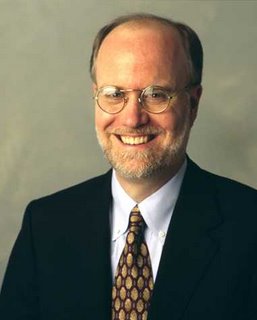
Why people will work for you -- Timothy Butler
Timothy Bulter is Harverd Business School's director of career development programs as well as the cofounder of Peregrine Partners, a career-assessment and executive-development firm.
Why people will work for you – Timothy Butler
Diana’s lost in her job. Diana has lost their previous passion for the job.
Let’s consider the other side of the coin. Imaging yourself as a manager.
The relationship between fear and control is important in understanding the attempt to motivate.
To become a leader who harness the full talents of people who report to you, though, I would suggest you must give up control, sacrifice some measure of your own power, and relinquish fear as a management tool.
Ceding control, delegating, and allowing another career to develop is really about diversity: about letting yourself truly experience another point of view.
Excellent managements truly see their employees – they know them well and can find the challenge that will tap their resourcefulness and channel their excitement to help the organization, at the same time feeding the employee’s growing sense of self.
Why people will work for you – Timothy Butler
Diana’s lost in her job. Diana has lost their previous passion for the job.
Let’s consider the other side of the coin. Imaging yourself as a manager.
The relationship between fear and control is important in understanding the attempt to motivate.
To become a leader who harness the full talents of people who report to you, though, I would suggest you must give up control, sacrifice some measure of your own power, and relinquish fear as a management tool.
Ceding control, delegating, and allowing another career to develop is really about diversity: about letting yourself truly experience another point of view.
Excellent managements truly see their employees – they know them well and can find the challenge that will tap their resourcefulness and channel their excitement to help the organization, at the same time feeding the employee’s growing sense of self.
Wednesday, July 19, 2006
Personality types

Personality types
ISTJ – Serious and quiet, interested in security and peaceful living. Extremely thorough responsible, and dependable. Well-developed powers of concentration. Usually interested in supporting and promoting traditions and establishments. Well-organized and hard working, they work steadily towards identified goals. They can usually accomplish any task once they have set their mind to it.
ISTP – Quiet, reserved, interested in how and why things work. Excellent skills with mechanical things. Risk-takers who they live for moment. Usually interested in and talented at systems, but not overly concerned with respecting laws and rules if they get in the way of getting something done. Detached and analytical, they excel at finding solutions to practical problems.
de·tached adj.
Separated; disconnected: a detached part; a detached plug.
Standing apart from others; separate: a house with a detached garage. Marked by an absence of emotional involvement and an aloof, impersonal objectivity. See Synonyms at cool.
Friday, June 02, 2006
Subscribe to:
Posts (Atom)